
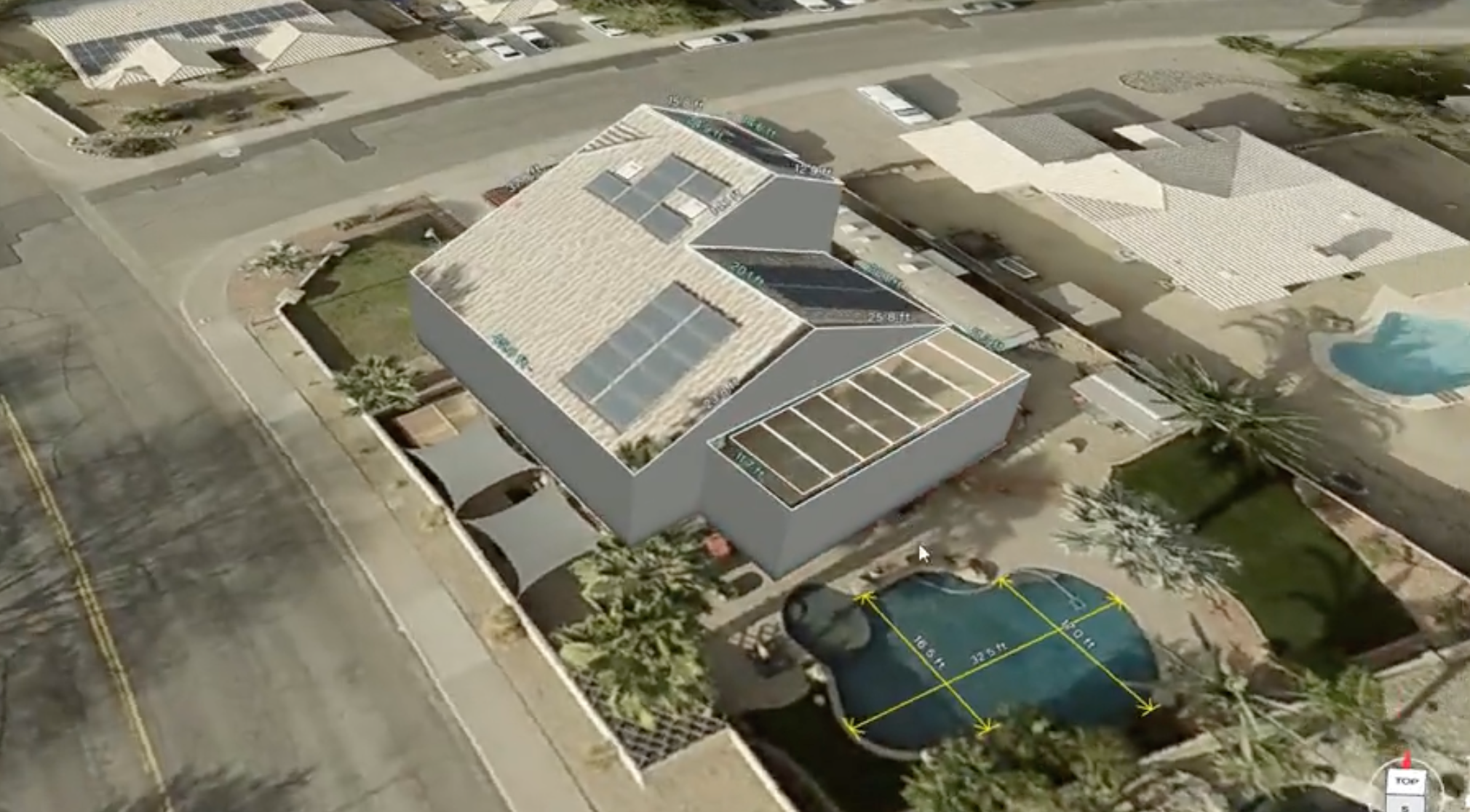
The answer depends on your pool size, how much sun your home gets, your roof space, and how warm you want the water to be. There is no single number that works for every pool, but there are simple guidelines that can help you understand what to expect.
Solar pool heating can be a great fit for homeowners in sunny areas like Las Vegas, San Diego, Orange County, Riverside, and San Bernardino. With the right system design, it can help you enjoy warmer water and a longer swim season.
Start With Your Pool Size
Solar pool heating systems are usually sized based on the surface area of your pool. That means the length and width of the pool matter more than just the number of gallons.
A simple way to estimate pool surface area is:
Pool length x pool width = pool surface area
For example, a 15-by-30-foot pool has about 450 square feet of surface area.
As a general rule, many solar pool heating systems need solar collector coverage equal to about 50% to 100% of the pool’s surface area. The exact amount depends on your climate, sun exposure, roof layout, and swim-season goals.
Simple Sizing Examples
Here are a few basic examples to help homeowners get a general idea:
| Pool Size | Pool Surface Area | Estimated Solar Collector Area |
|---|---|---|
| 12 ft x 24 ft | 288 sq. ft. | 144–288 sq. ft. |
| 15 ft x 30 ft | 450 sq. ft. | 225–450 sq. ft. |
| 16 ft x 32 ft | 512 sq. ft. | 256–512 sq. ft. |
| 20 ft x 40 ft | 800 sq. ft. | 400–800 sq. ft. |
These are only planning estimates. The final number of solar panels depends on the panel size, roof space, sunlight, plumbing layout, and how much heating performance you want.
Why Roof Space Matters
Your roof plays a big role in solar pool heating performance. Solar collectors need direct sunlight to work well, so the best location is usually an area with strong sun exposure and limited shade.
Shade from trees, chimneys, neighboring homes, or roof equipment can reduce performance. Roof direction and roof pitch can also make a difference.
If your roof has limited space, a professional installer can help determine whether another roof section or a different layout may work for your home.
Location Makes a Difference
Solar pool heating is especially useful in sunny regions because the system depends on available sunlight. Celestial Solar provides solar pool heating services in Las Vegas, San Diego, Orange County, Riverside, and San Bernardino.
In Las Vegas and Henderson, solar pool heating can help make the pool more comfortable during spring and fall when the air may be warm but the water still feels cool.
In San Diego and coastal Southern California, solar pool heating can help offset cooler pool water caused by mild coastal weather.
In Riverside and San Bernardino, strong inland sun exposure can make solar pool heating a practical choice for homeowners who want more swim time throughout the year.
Your Swimming Goals Matter
Not every homeowner wants the same result. Some people want a small temperature boost so the pool feels more comfortable. Others want to extend the swim season as much as possible.
If you want more months of comfortable swimming, you may need more solar collector area. If you only want a modest improvement during warmer months, your system may be smaller.
That is why a custom estimate is important. The right system should match your pool, your home, and how you actually want to use the pool.
Does a Pool Cover Reduce the Number of Panels Needed?
A pool cover can help your solar pool heating system work more efficiently. Pools lose a lot of heat through evaporation, especially overnight or on windy days.
A cover helps hold heat in the water longer. That means the solar pool heating system does not have to replace as much lost heat each day.
The U.S. Department of Energy notes that pool covers can reduce pool heating costs and may also reduce the size and cost of a solar pool heating system.
Solar Pool Heating Panels Are Not the Same as Solar Electric Panels
This is a common point of confusion. Solar pool heating panels are different from solar electric panels.
Solar electric panels create electricity for your home. Solar pool heating panels, also called solar collectors, use the sun to heat pool water directly.
Pool water circulates through the solar collectors, warms up from the sun, and then returns to the pool. Because of that, solar pool heating is sized around your pool’s surface area and heating needs, not your home’s electricity usage.
Why a Professional Estimate Is the Best Next Step
Online sizing examples are helpful, but they cannot see your home. They cannot measure your roof, check shade, review your pool equipment, or understand how much you want to extend your swim season.
- A professional estimate can help answer important questions like:
- How much solar collector area your pool needs
- Where the solar panels should be installed
- Whether your roof has enough usable space
- How shade may affect performance
- Whether your existing pool pump and equipment are compatible
- What size system makes the most sense for your goals
So, How Many Solar Panels Do You Need?
Most homeowners should expect the answer to depend on pool size, sun exposure, roof space, and desired swim season.
As a general starting point, many systems use solar collector coverage equal to about 50% to 100% of the pool’s surface area. A smaller pool may need less collector area, while a larger pool or a homeowner who wants a longer swim season may need more.
The best way to get an accurate answer is to have your pool and property evaluated by an experienced solar pool heating installer.
Ready to Find Out What Size Solar Pool Heating System Your Pool Needs?
Celestial Solar & Water Systems can evaluate your pool, roof space, sun exposure, and existing equipment to recommend the right solar pool heating system for your home.
Contact Celestial Solar today to schedule your free estimate and find out how many solar pool heating panels your pool may need.
