
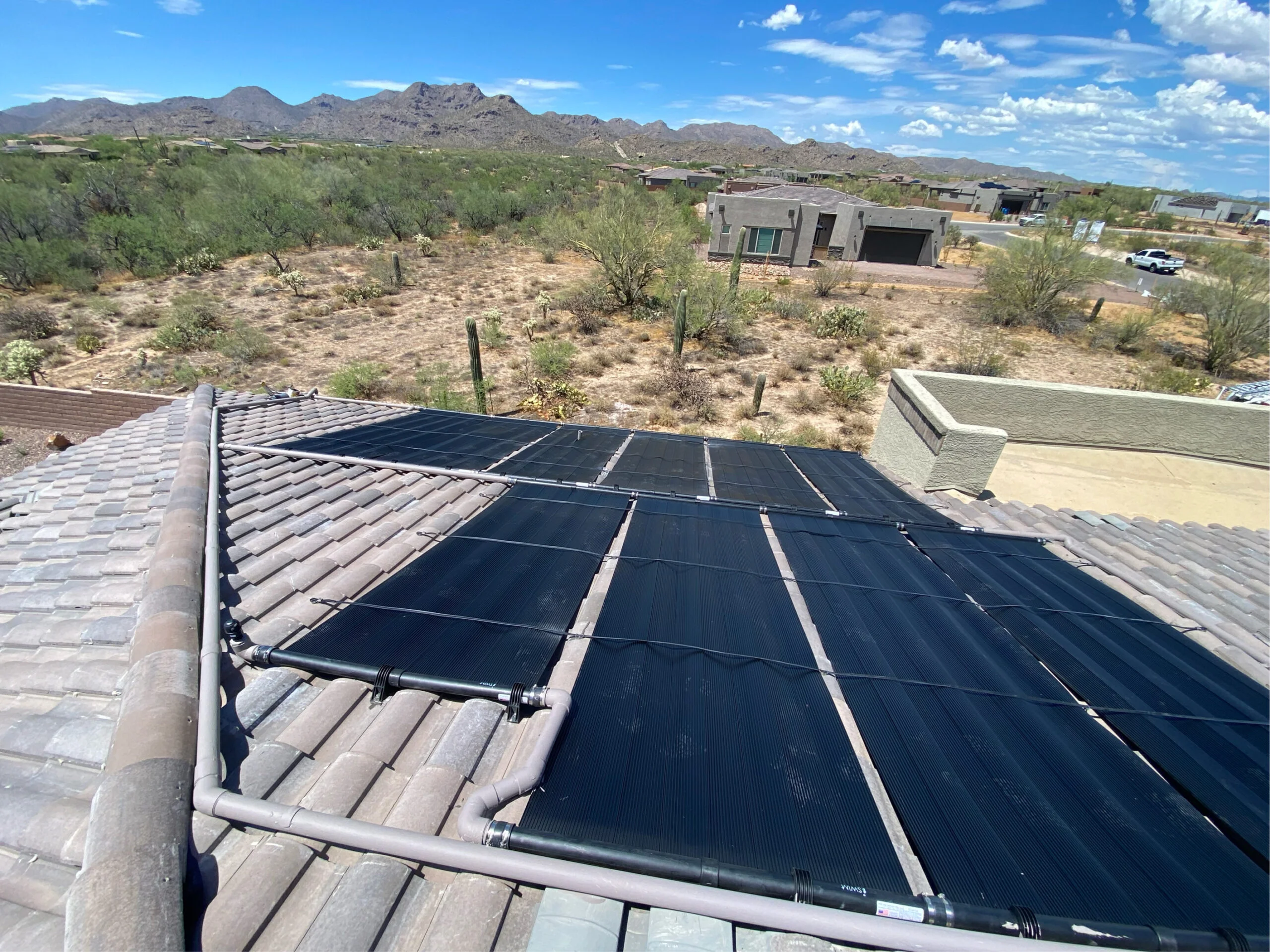
If you’ve been thinking about adding solar pool heating to your home in Las Vegas or Arizona, you might be wondering what the installation is actually like. Many homeowners are excited about the idea of warmer water and lower energy bills, but they still ask the same questions:
- “What will happen to my roof?”
- “How long does the installation take?”
- “Will the system be noticeable?”
- “Is it noisy or disruptive?”
The good news is that solar pool heating installations are usually straightforward, fast, and minimally intrusive. Here’s a simple step by step look at what you can expect so you feel fully prepared.
Step 1: A Technician Evaluates Your Roof and Pool Equipment
Before anything is installed, a technician visits your home to make sure:
- Your roof gets good sun exposure
- The structure can support solar panels
- Your pool pump and plumbing are compatible
- The system can be routed cleanly and safely
In the desert Southwest, most homes are great candidates because of long rooflines, open backyard exposure, and abundant sunshine.
This step ensures the setup fits your home’s layout without affecting roof integrity.
Step 2: Planning the System Layout
Once the evaluation is complete, the installation team designs a layout that considers:
- The best roof surface for maximum sunlight
- Panel placement that keeps a clean look
- A clear path for plumbing lines
- Proper slope for smooth water flow
The goal is efficiency and aesthetics. Many homeowners are surprised at how neat and low profile the system looks once it’s installed.
Step 3: Installing the Solar Panels
On installation day, the team mounts the solar panels using brackets specifically designed for your roof type. In Las Vegas and Arizona, this often includes:
- Tile roofs
- Asphalt shingle roofs
- Flat foam roofs
- Concrete or clay roofs
Each mount is sealed carefully to protect the roof and prevent leaks. This is often the step homeowners worry about most, but modern mounting systems are designed to keep roofs fully protected.
Panels sit close to the roof, blend in with the surface, and stay secure during desert winds.
Step 4: Connecting the Plumbing Lines
Once the panels are in place, the installer connects piping from your pool pump to the solar panels. Here’s what happens:
- Water is diverted from your pool pump to the solar panels
- Sunlight warms the water as it circulates
- The warm water returns back into your pool
Most lines are tucked neatly along the side of the roof or wall, designed to blend with the home’s exterior. The system uses your existing pump, so no additional noise or equipment is usually required.
Step 5: Installing the Controller or Valve System
To manage water flow, a controller or manual valve is installed near your pool equipment pad. This step:
- Regulates when water moves through the solar panels
- Helps maintain consistent temperature
- Prevents overheating or cooling on cloudy days
Homeowners love this feature because it makes the system simple and automatic.
Step 6: System Testing and Fine Tuning
Before the team leaves, they:
- Test all plumbing connections
- Confirm proper water flow
- Check pressure levels
- Inspect roof seals
- Make sure the panels are heating correctly
This quality check ensures everything is safe and performing well from day one.
Step 7: Your Pool Begins Warming Up — Naturally
Once your system is active, you can expect a gradual increase in pool temperature. In Las Vegas and Arizona, solar pool heaters often warm the water by:
- 8 to 15 degrees
- Extending the season by months
- Making spring and fall swimming comfortable
Most homeowners notice a difference in just a few days.
How Long Does Installation Take?
A typical installation usually takes one day, sometimes two for larger setups. There is no major construction, no tearing into your roof, and no loud equipment. Most of the work happens outside, and the process is tidy and contained.
Will It Damage the Roof?
This is the biggest concern for most homeowners. The answer:
A proper installation does not harm your roof.
Modern mounting systems:
- Are designed for all common desert roof types
- Include watertight flashing
- Distribute weight safely
- Keep roof warranties intact when installed correctly
In fact, solar panels can help protect the portion of the roof they cover from wear and sun exposure.
Final Thoughts
Installing solar pool heating is one of the easiest upgrades you can make to your home in the desert Southwest. The process is smooth, fast, and minimally disruptive. More importantly, it transforms your pool into a warm, usable retreat for much longer each year without driving up utility costs.
If you’ve been hesitant because you weren’t sure how installation works, hopefully this step by step guide gives you the clarity and peace of mind you need to move forward.
Ready to enjoy a longer swim season? Reach out today for a free quote and see how easy it is to add solar heat to your pool.
Get your free solar pool heating estimate today.
